Practical guidance for navigating technology, architecture, and the future of work
Summary:
Work feels different now. AI has changed the pace, the pressure, and the way people think about their own value. Hard to Replace is a practical guide for making sense of that change without giving in to panic or hype.
Jim Hutcherson brings four decades of experience across enterprise technology, military service, and workforce transformation. He traces the path from personal computing to the internet to AI through the eyes of someone who lived the shifts, missed some signals, learned from them, and kept moving. His story includes growing up near the Apollo launch pads, taking a Radio Shack TRS-80 on his first Navy deployment, and helping his wife research her cancer diagnosis at the level her doctors were writing about it.
The book is honest about what change asks of people. Hutcherson writes plainly about where he moved too slowly, what he misunderstood, and why smart people often wait longer than they should. That honesty gives the book its usefulness. He has seen enough disruption to know that the people who adapt are rarely the ones with perfect timing. They are the ones willing to start before they feel ready.
At the center of the book is what Hutcherson calls the human constant. Purpose, judgment, creativity, empathy and connection, and adaptability are not soft extras. They are the capabilities that become more important when machines handle more of the routine work.
Hard to Replace also takes on the barriers that keep capable people stuck. Identity protection, impostor feeling, analysis paralysis, and the quiet fear that it may already be too late. Hutcherson gives readers a practical way to move through those barriers with small steps they can begin using immediately.
The result is a book about staying useful, steady, and fully human through this wave of change and the ones that follow.
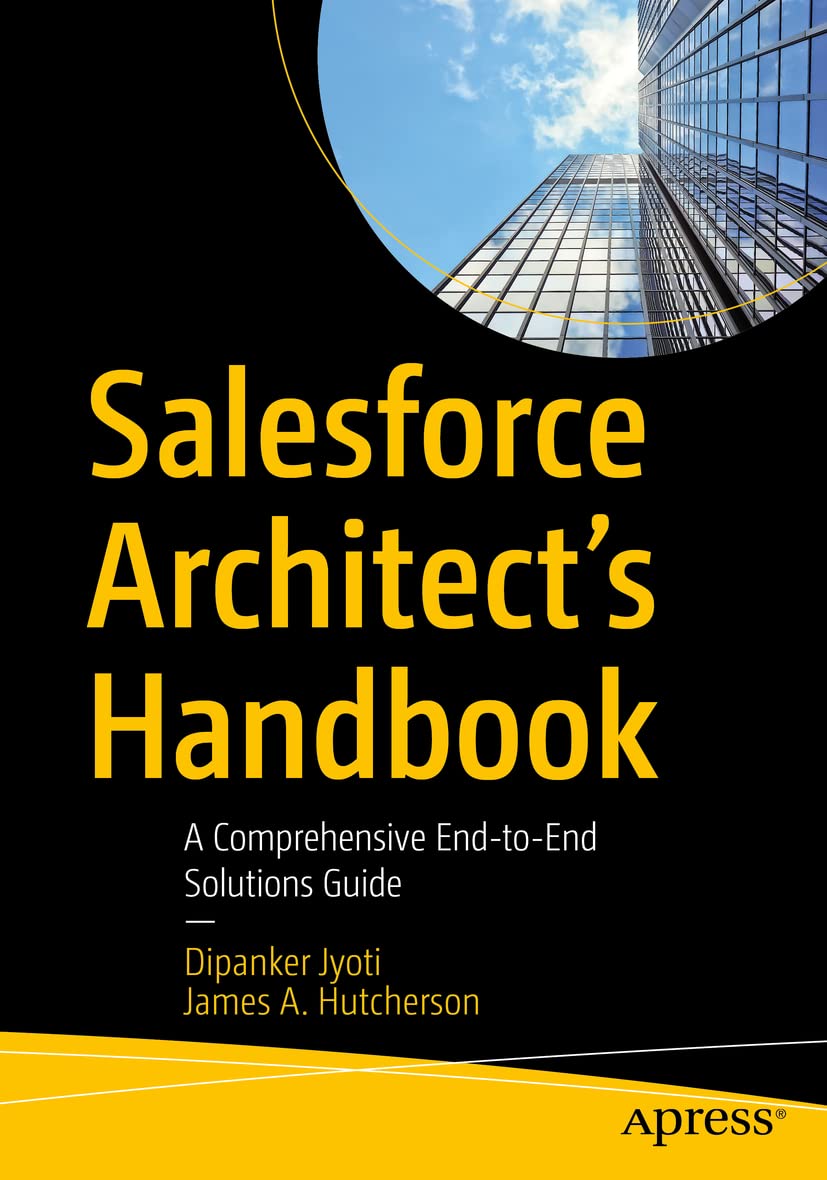
About the Book:
A comprehensive guide to the seven architectural domains of the Salesforce platform, equipping architects and developers with the knowledge and artifacts needed to design end-to-end enterprise solutions on Salesforce.
The Salesforce Architect's Handbook takes a deep look at the seven architectural domains that must be considered when designing a Salesforce-based solution. It equips readers to develop the artifacts needed for an end-to-end enterprise architecture blueprint for Salesforce implementation and DevOps.
Readers will learn how to approach Salesforce solution architecture, data architecture, security architecture, integration architecture, and identity and access management architecture. The book also covers strategies for Salesforce-based mobile applications and walks through the full development and deployment lifecycle.
What You'll Learn:
Perfect for: Salesforce architects, aspiring architects, senior developers, technical leads, and solution consultants. Valuable for professionals preparing for Salesforce architect certifications including Certified Application Architect, Certified System Architect, and Certified Technical Architect.
Recognition:
About the Book:
Master automation and workflow design on the Salesforce platform with practical, hands-on guidance. This comprehensive guide covers everything from basic Flow fundamentals to advanced automation techniques.
Learn how to build powerful, efficient automations that streamline business processes and enhance productivity. Whether you're new to Salesforce Flow or looking to advance your automation skills, this book provides the knowledge and real-world examples you need.
Whether you're a Salesforce administrator, developer, or business analyst, this book equips you with the practical skills to leverage Flow's full potential and deliver automation solutions that drive business value.
Perfect for: Salesforce administrators, developers, and business analysts looking to master process automation and workflow design on the Salesforce platform.
Join my newsletter to be the first to know about new books, exclusive content, and behind-the-scenes insights from my writing process.